← Back to Bernard of Clairvaux
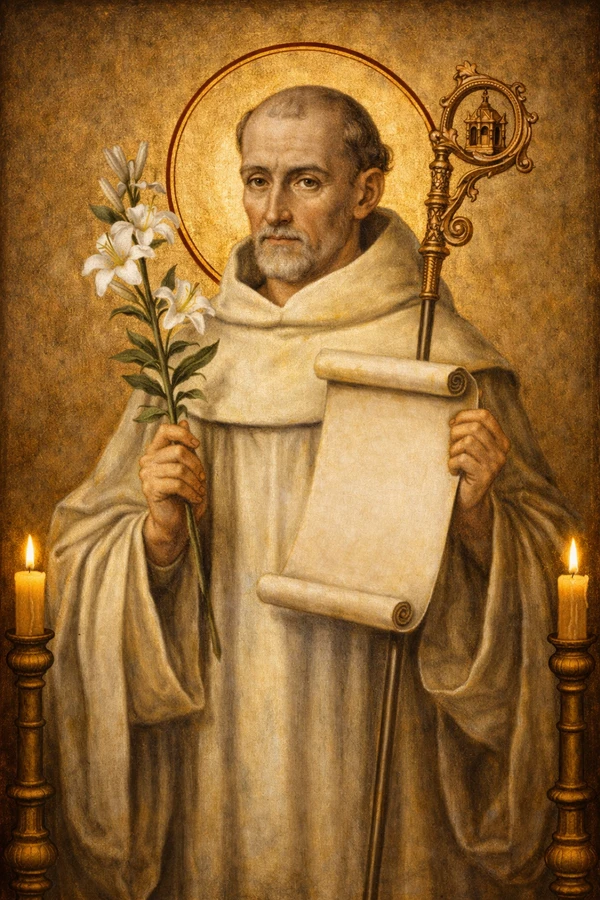
BERNARD OF CLAIRVAUX · 12TH CENTURY · CISTERCIAN
Sermons on the Song of Songs
Summary and key themes of this work
Eighty-six sermons delivered to his monks over eighteen years — left unfinished at Bernard's death, reaching only the beginning of the third chapter of the Song of Songs. This is not a deficiency but the point: the Song, for Bernard, is inexhaustible because the love it describes is inexhaustible. Bernard reads the biblical love poem as the drama of the soul's relationship with Christ the divine Bridegroom. The kiss of the mouth is the gift of contemplation. The wounds of love are the marks of transformation. The beloved's absence is the painful but necessary withdrawal that deepens desire. The sermons move between exegesis, pastoral counsel, and moments of extraordinary lyrical power. Bernard is candid about his own experience — he describes moments when the Word has visited his soul and moments when the Word has withdrawn — with a directness that makes the mystical life feel not remote but intimate and human.
Sermons on the Song of Songs is a central text in the Christian mystical tradition, offering insight into the spiritual life, the nature of divine union, and the transformation of the soul.
This work is central to the Cistercian tradition, shaping the understanding of the spiritual life and the soul's journey toward union with God.
Selected Passages
I have loved because I have loved; I have loved that I might love.
There are those who seek knowledge for the sake of knowledge: that is curiosity. There are those who seek knowledge to be known by others: that is vanity. But there are also those who seek knowledge in order to serve: that is love.
You wish to see; listen. Hearing is a step toward vision.
Read the Work (Free)
Buy a Copy (Optional)
Some links (such as Amazon) may be affiliate links.
This supports the site at no extra cost to you.