← Back to Bernard of Clairvaux
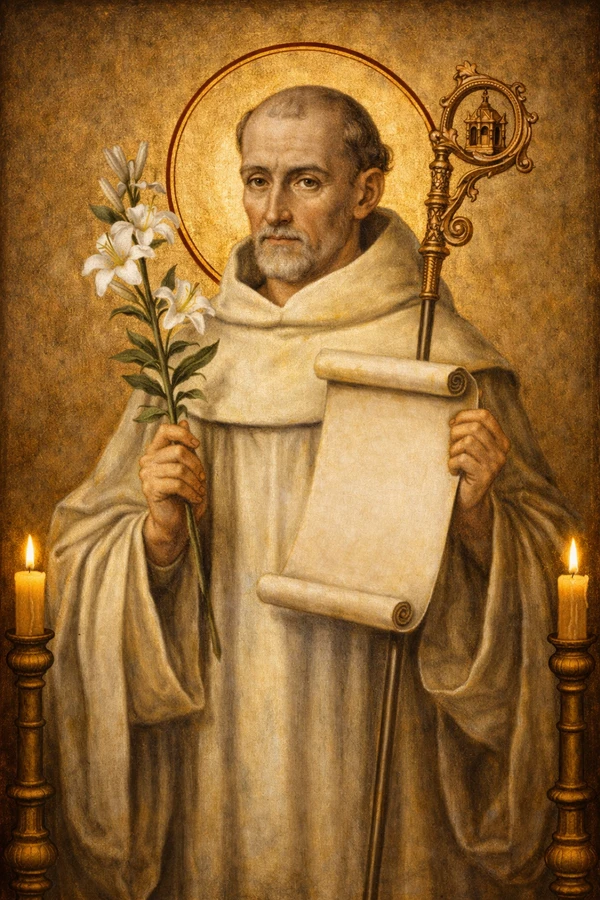
BERNARD OF CLAIRVAUX · 12TH CENTURY · CISTERCIAN
On Loving God
Summary and key themes of this work
The definitive statement of Bernard's love-mysticism, and one of the most concentrated meditations on desire in the Christian tradition. Bernard asks a simple question — why should we love God? — and gives an answer that unfolds across four degrees of love. The soul begins by loving itself for its own sake, then learns to love God for the benefits God gives, then rises to love God for God's own sake, and finally reaches a state where it loves even itself only in God. This last degree, Bernard admits, he is not sure can be fully achieved in this life — but the reaching toward it is the substance of the spiritual journey. The prose is tight, warm, and utterly free of abstraction. Bernard's famous line — 'The measure of loving God is to love him without measure' — captures the paradox: love has no natural limit, because its object is infinite. This short treatise can be read in an afternoon, but its vision of love as the organizing principle of all reality repays a lifetime of reflection.
On Loving God is a central text in the Christian mystical tradition, offering insight into the spiritual life, the nature of divine union, and the transformation of the soul.
This work is central to the Cistercian tradition, shaping the understanding of the spiritual life and the soul's journey toward union with God.
Selected Passages
The reason for loving God is God Himself. The measure of this love is to love without measure.
Love is sufficient in itself; it pleases by itself and for its own sake. It is itself a merit and its own reward.
Read the Work (Free)
Buy a Copy (Optional)
Some links (such as Amazon) may be affiliate links.
This supports the site at no extra cost to you.