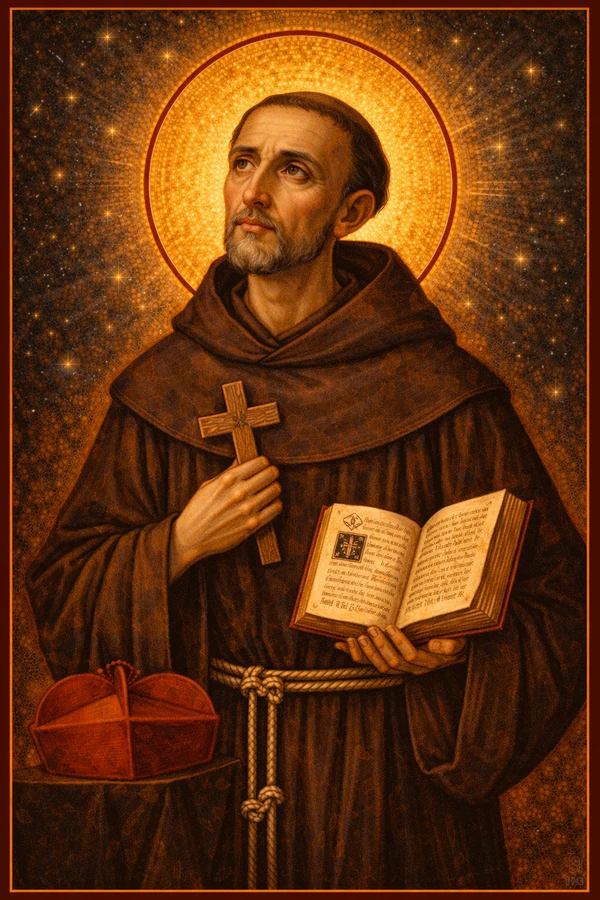
JOHN OF THE CROSS · 16TH CENTURY · CARMELITE
Dark Night of the Soul
Summary and key themes of this work
The phrase 'dark night of the soul' has entered common language, but its original meaning is far more precise — and more hopeful — than most people realize. John of the Cross describes two purgations: the dark night of the senses, in which the soul's dependence on emotional consolation is withdrawn, and the dark night of the spirit, in which even the felt presence of God disappears. These are not punishments but acts of love — God removing what is not God so that the soul can receive God directly. The work is a commentary on John's own poem, composed during nine months of imprisonment in a cell barely large enough to stand in. The prose is systematic and sometimes demanding, but the underlying vision is one of extraordinary tenderness: the darkness is not God's absence but the overwhelming proximity of a light too bright for the soul's accustomed sight. For anyone who has experienced the collapse of spiritual feeling and wondered whether God has departed, this book offers the most profound answer the Christian tradition has produced.
Dark Night of the Soul is a central text in the Christian mystical tradition, offering insight into the spiritual life, the nature of divine union, and the transformation of the soul.
This work is central to the Carmelite tradition, shaping the understanding of the spiritual life and the soul's journey toward union with God.
Selected Passages
O guiding night! O night more lovely than the dawn! O night that has united the Lover with His beloved, transforming the beloved in her Lover.
Read the Work (Free)
Buy a Copy (Optional)
Some links (such as Amazon) may be affiliate links.
This supports the site at no extra cost to you.