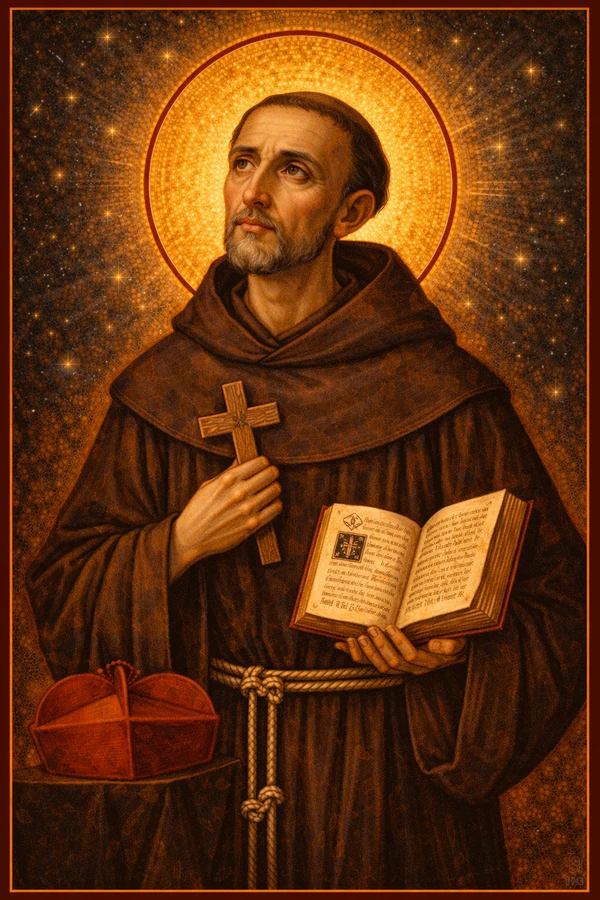
JOHN OF THE CROSS · 16TH CENTURY · CARMELITE
Ascent of Mount Carmel
Summary and key themes of this work
The companion work to the Dark Night, presenting John of the Cross's systematic account of the active purification that prepares the soul for contemplative union. Where the Dark Night describes what God does to the soul, the Ascent describes what the soul must do for itself: the voluntary detachment from sensory gratification, intellectual pride, and spiritual ambition that clears the ground for God's deeper work. John's famous principle — 'To come to possess all, desire to possess nothing' — is not nihilism but the logic of love: attachment to anything less than God prevents the soul from receiving God fully. The work is demanding and sometimes austere, but its underlying conviction is that freedom, not deprivation, is the goal. John is stripping away what enslaves, not what gives life.
Ascent of Mount Carmel is a central text in the Christian mystical tradition, offering insight into the spiritual life, the nature of divine union, and the transformation of the soul.
This work is central to the Carmelite tradition, shaping the understanding of the spiritual life and the soul's journey toward union with God.
Selected Passages
To come to possess all, desire to possess nothing. To come to be all, desire to be nothing.
The soul that is attached to anything, however much good there may be in it, will not arrive at the liberty of divine union.
Read the Work (Free)
Buy a Copy (Optional)
Some links (such as Amazon) may be affiliate links.
This supports the site at no extra cost to you.