← Back to Gregory of Nazianzen
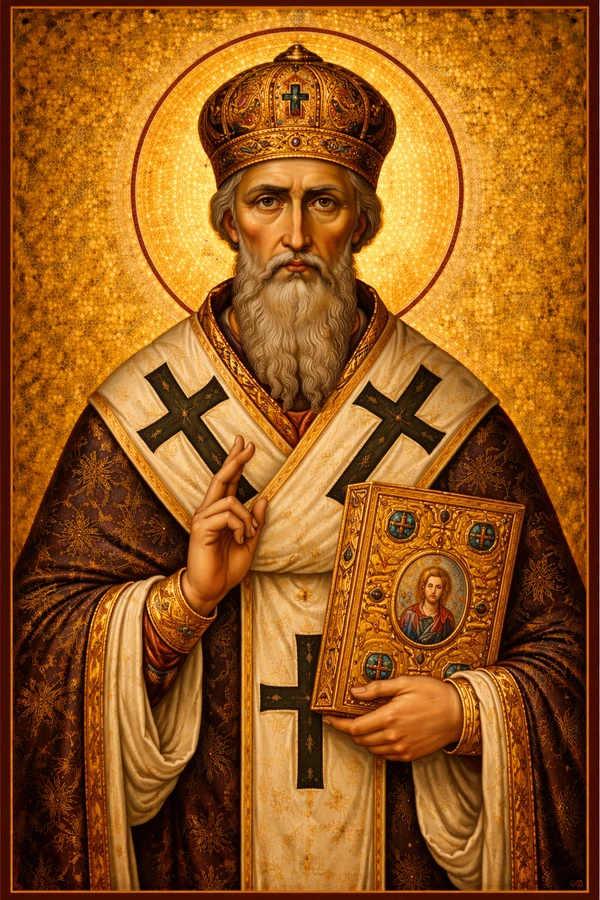
GREGORY OF NAZIANZEN · 4TH CENTURY · CAPPADOCIAN
Theological Orations
Summary and key themes of this work
Five orations delivered in a small chapel in Constantinople in 380 that became the definitive statement of Trinitarian orthodoxy. Gregory arrived in the city as the leader of a tiny Nicene minority facing Arian dominance. What he produced under that pressure was a masterpiece of theological precision and rhetorical art. The first two orations establish the conditions for genuine theology — only the purified mind can speak of God, and even then with humility. The third and fourth defend the full divinity of the Son against every Arian objection. The fifth, on the Holy Spirit, completes the picture: the Spirit is not a creature but fully God. Gregory's famous Christological principle — 'What has not been assumed has not been healed' — appears here, and his insistence that God ultimately exceeds all human concepts anticipates the entire apophatic tradition.
Theological Orations is a central text in the Christian mystical tradition, offering insight into the spiritual life, the nature of divine union, and the transformation of the soul.
This work is central to the Cappadocian tradition, shaping the understanding of the spiritual life and the soul's journey toward union with God.
Selected Passages
God always was, and is, and will be; or rather God always Is. For 'was' and 'will be' are fragments of time and of a changing nature; but He is ever existing.
It is difficult to conceive God, but to define Him in words is an impossibility.
What has not been assumed has not been healed.
Read the Work (Free)
Buy a Copy (Optional)
Some links (such as Amazon) may be affiliate links.
This supports the site at no extra cost to you.