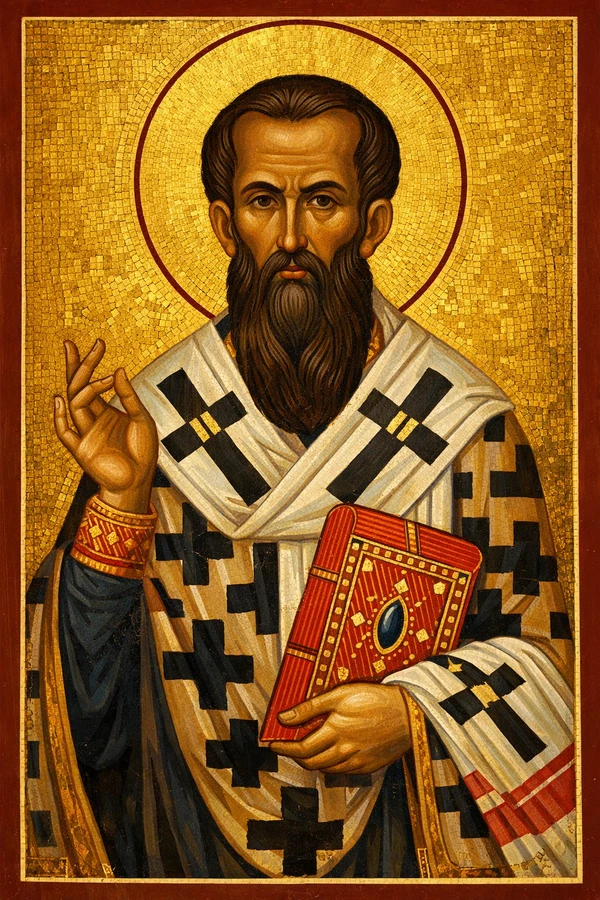
BASIL THE GREAT · 4TH CENTURY · CAPPADOCIAN
On the Holy Spirit
Summary and key themes of this work
The work that secured the divinity of the Holy Spirit in Christian orthodoxy. Writing in the midst of the Arian crisis, Basil argues that the Spirit is not a subordinate creature but deserves the same worship and glory as the Father and the Son. His method is characteristically careful: rather than making direct dogmatic assertions that would provoke his opponents, he builds his case from liturgical practice, Scripture, and the logic of salvation itself — if the Spirit sanctifies, the Spirit must be divine. The treatise is also a profound meditation on tradition and how the Church knows what it knows: Basil appeals to unwritten customs transmitted alongside Scripture, arguing that the Church's lived worship carries theological authority. The result shaped not only Trinitarian doctrine but the Christian understanding of how theology and worship relate.
On the Holy Spirit is a central text in the Christian mystical tradition, offering insight into the spiritual life, the nature of divine union, and the transformation of the soul.
This work is central to the Cappadocian tradition, shaping the understanding of the spiritual life and the soul's journey toward union with God.
Selected Passages
The Spirit restores paradise to us and leads us back to the kingdom of heaven.
The Holy Spirit perfects all other beings in goodness, and in every way makes them worthy of receiving their form. He Himself is worthy of that which is given, and is known as holy from all eternity.
Read the Work (Free)
Buy a Copy (Optional)
Some links (such as Amazon) may be affiliate links.
This supports the site at no extra cost to you.