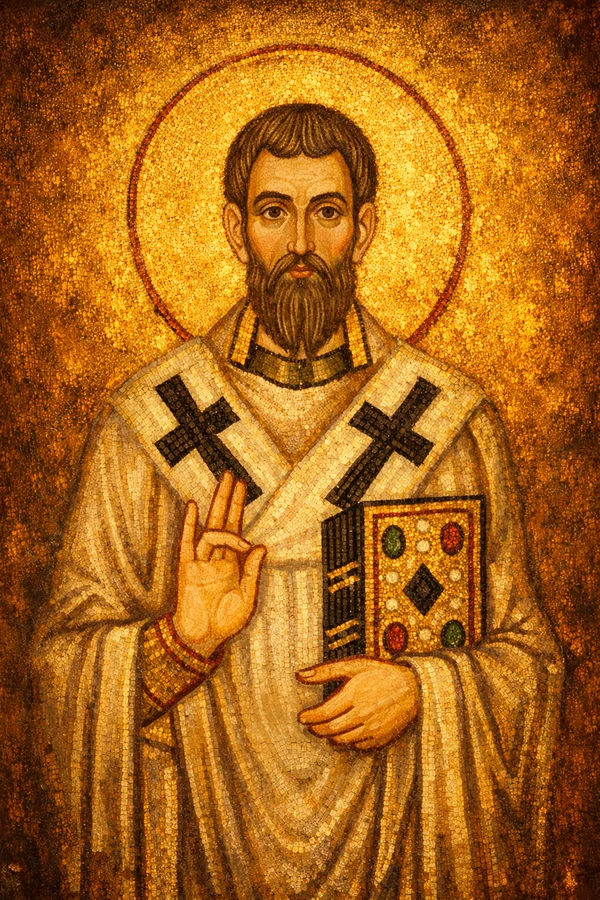
GREGORY OF NYSSA · 4TH CENTURY · CAPPADOCIAN
Life of Moses
Summary and key themes of this work
Gregory of Nyssa takes the story of Moses — the burning bush, the crossing of the Red Sea, the ascent of Sinai, the cleft of the rock — and reads it as a map of the soul's journey into God. The result is one of the most original and beautiful works in Christian theology. Gregory's key insight is that Moses' encounters with God move from light to darkness: the burning bush is luminous, but the cloud on Sinai is dark, and the final encounter happens in a cleft of rock where Moses sees only God's back as he passes by. This pattern is deliberate. The deeper the soul goes into God, the more it discovers that God exceeds every concept and image. True vision, Gregory writes, 'consists in not seeing.' And because God is infinite, the soul's desire for God can never be satisfied — not because God withholds himself, but because there is always more. This is Gregory's doctrine of epektasis: the soul's perfection is an eternal reaching forward, an endless progress into inexhaustible beauty.
Life of Moses is a central text in the Christian mystical tradition, offering insight into the spiritual life, the nature of divine union, and the transformation of the soul.
This work is central to the Cappadocian tradition, shaping the understanding of the spiritual life and the soul's journey toward union with God.
Selected Passages
Concepts create idols; only wonder comprehends anything.
The true vision of the One we seek consists in this: in not seeing.
This truly is the vision of God: never to be satisfied in the desire to see Him.
Read the Work (Free)
Buy a Copy (Optional)
Some links (such as Amazon) may be affiliate links.
This supports the site at no extra cost to you.