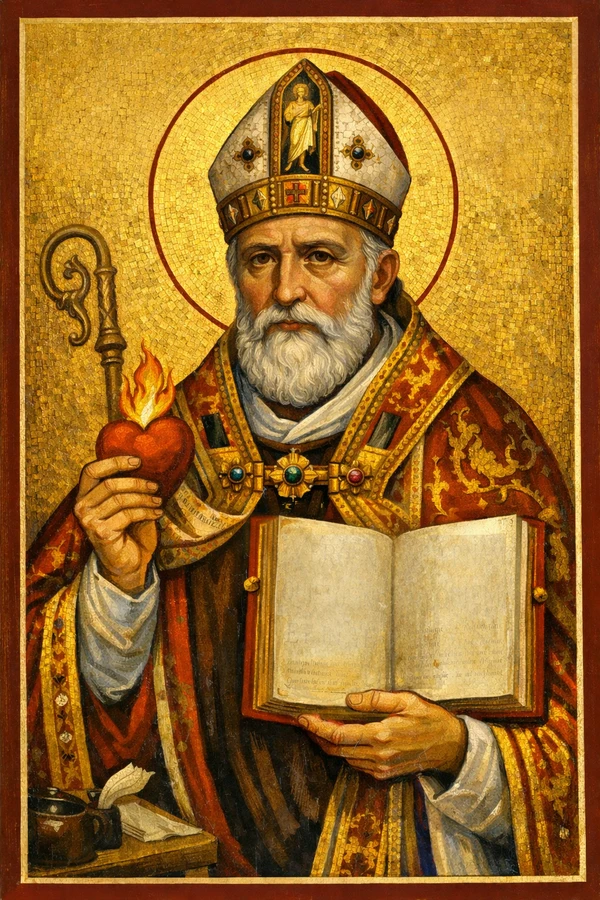
AUGUSTINE OF HIPPO · 4TH–5TH CENTURY · LATIN
The City of God
Summary and key themes of this work
Augustine's largest and most ambitious work, written over thirteen years in response to the sack of Rome by the Visigoths in 410. The charge was devastating: Rome fell because it abandoned its old gods for Christianity. Augustine's answer is a complete theology of history. He distinguishes two cities — the city of God, founded on love of God, and the earthly city, founded on love of self — and traces their intertwined histories from creation to the last judgment. The first ten books dismantle Roman religion and philosophy with forensic precision. The last twelve construct a Christian vision of time, providence, and human destiny. The City of God is vast, sometimes sprawling, and occasionally digressive, but its central insight remains powerful: no earthly civilization is ultimate, and the deepest human loyalties must be placed beyond the reach of any empire's collapse.
The City of God is a central text in the Christian mystical tradition, offering insight into the spiritual life, the nature of divine union, and the transformation of the soul.
This work is central to the Latin tradition, shaping the understanding of the spiritual life and the soul's journey toward union with God.
Selected Passages
Thou hast made us for Thyself, and the whole world cannot fill the heart of Man, for it was made to be filled by Thee.
Read the Work (Free)
Buy a Copy (Optional)
Some links (such as Amazon) may be affiliate links.
This supports the site at no extra cost to you.